The Altomi Universal Operational Architecture (UOA) is a next-generation operational backbone that captures work, quality, compliance, and outcomes in real time.
Scalable, AI-Ready Operational Architecture, Powering Industries
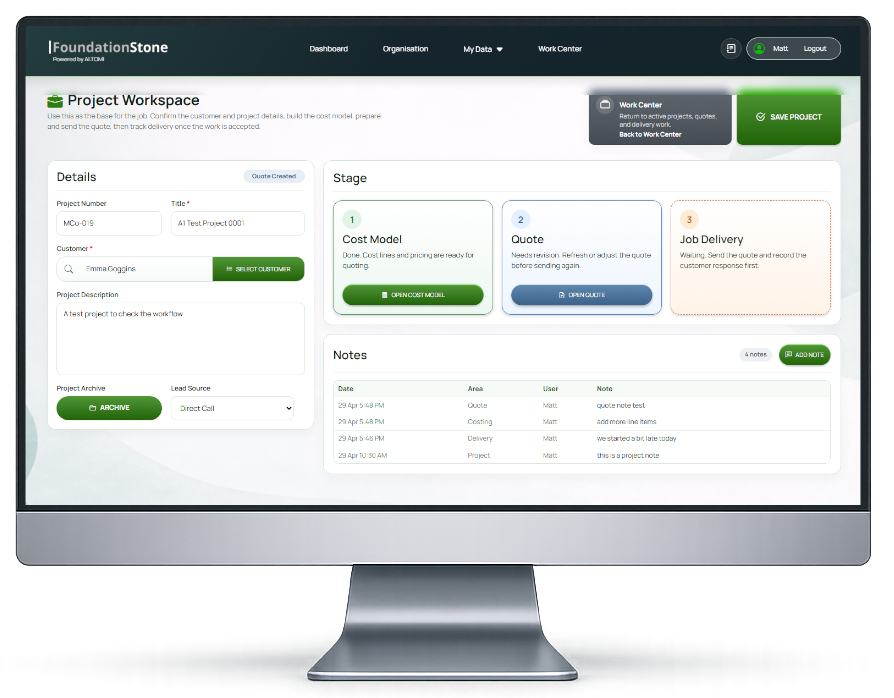
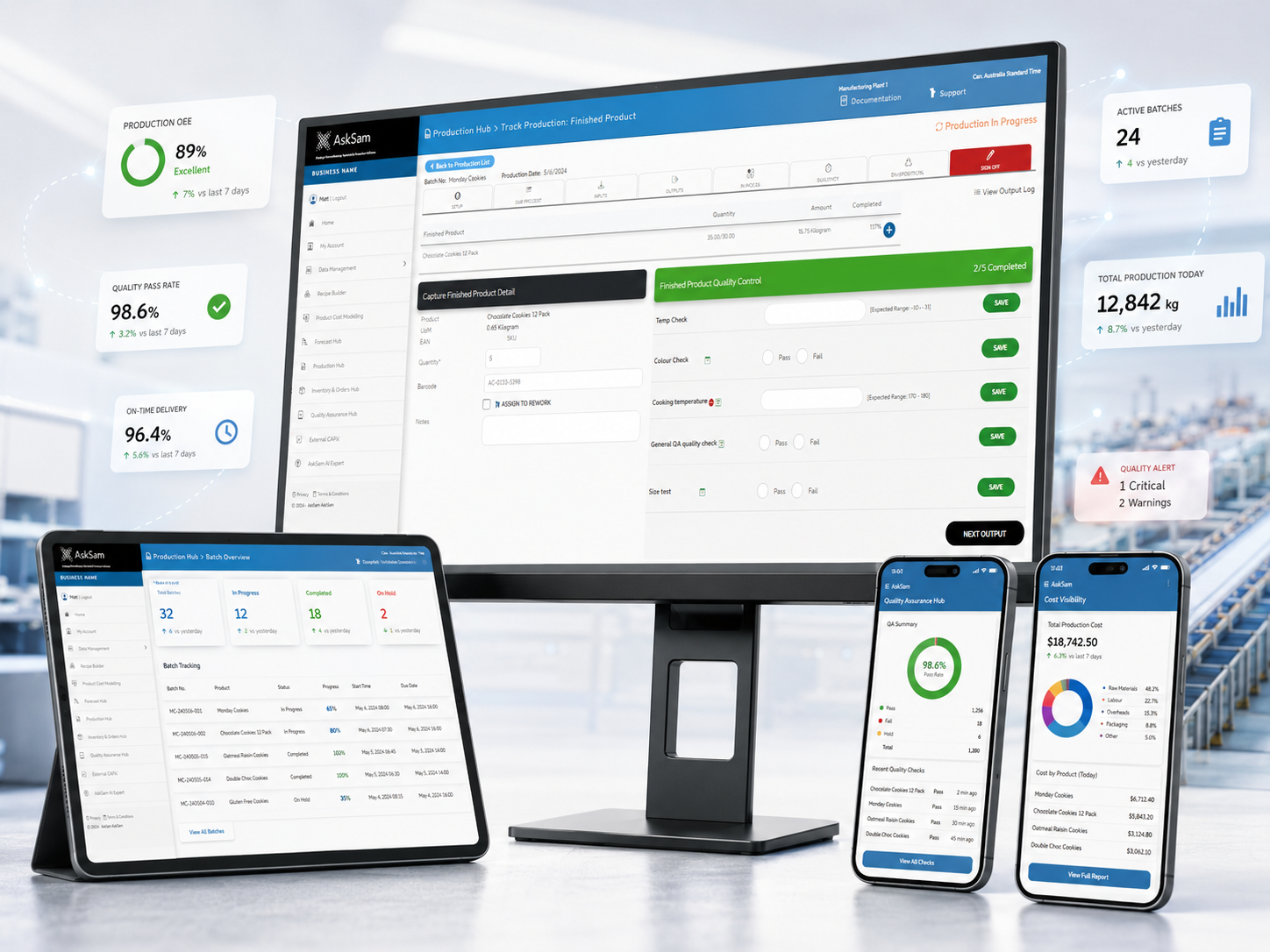
The Altomi Universal Operational Architecture (UOA) is a next-generation operational backbone that captures work, quality, compliance, and outcomes in real time. Applications like Multiverse, FoundationStone, and Cartographer run on this platform, proving that diverse industries can leverage the same core infrastructure while meeting sector-specific rules and regulations.
One Operational Core, Two Roles
UOA and applications like Multiverse play complementary roles. The Universal Operational Architecture is the invisible operational backbone. It records work, quality, compliance, and outcomes in a consistent, machine-readable, and auditable form, but it is not experienced directly by end users.
Multiverse is the user-facing application built on top of UOA. It translates operational truth into readable and actionable workflows, using industry-specific terminology and interfaces that align with how each sector operates. UOA ensures consistency and trust; Multiverse delivers day-to-day clarity and value.
By consolidating operational truth within UOA and exposing it through vertical applications, organisations reduce risk, lower costs, accelerate scaling, and create a defensible, next-generation investment opportunity. For regulators and researchers, applications built on UOA provide verifiable, time-aligned evidence of real operations, bridging operational reality with trusted oversight.
Different industries. The same operational reality.
Across sectors from manufacturing to care services, work follows the same fundamental pattern: plan, allocate resources, execute, track, and review.
Yet most organisations operate in silos, relying on spreadsheets, disconnected systems, or manual processes, creating blind spots, slowing teams, increasing compliance risk, and preventing data-driven decision-making.
The Altomi Universal Operational Architecture unifies data capture and operational logic, allowing businesses to seamlessly plan, manage, and execute activities across industries while preserving sector-specific workflows and terminology.
Clarity and control through a single operational core
Applications built on UOA provide a consistent workflow and data model for planning, costing, execution, tracking, quality, compliance, and review. Industry-specific rules and terminology sit on top without altering the core. UOA enforces operational logic, while vertical applications translate that logic into human-readable actions and decisions.
Built-in logging, QA, and structured data enable scale, auditability, and adaptability. By capturing operations correctly, UOA-powered applications support proactive decision-making, automation, and AI-driven insights. Over time, this delivers faster problem detection, consistent compliance, optimised performance, and a platform that evolves with technology, turning complex, siloed operations into a unified, intelligent system.
A platform that compounds over time
Because every industry implementation is built on the same operational core, improvements in one area strengthen the platform as a whole. Users adopt products like Multiverse; investors benefit from UOA as the compounding operational foundation beneath them.
New industries can be configured rather than rebuilt. Capabilities developed for one sector flow naturally to others, creating strong operating leverage and a clear path to scalable growth.
Platform characteristics:
Low marginal cost of expansion
Shared innovation across verticals
Reduced delivery risk over time
Increasing defensibility as the platform matures
Applied across real-world industries
Universal Operational Architecture has been rigorously tested and validated across multiple operationally complex sectors through pilots, simulations, and real-world operational scenarios, each with distinct workflows, compliance requirements, and risks.
We continue to work with organisations in other sectors to explore how UOA can be adapted to their specific operational needs.
Manufacturing
Production planning, costing, QA, inventory and audit-ready traceability, built on a shared foundation.
Trades & Building
Job creation, quoting, costing, task tracking and margin visibility, without relying on spreadsheets.
Disability & Care
Service delivery, staff utilisation, compliance and audit support, designed for regulated environments.
Contact Us
The Universal Operational Architecture (UOA) is not sold or used in isolation. Its value is realised through applications like Multiverse that make operational reality visible, usable, and trustworthy across industries.
Helping businesses move forward with confidence
The Universal Operational Architecture (UOA) is a regulatory- and enterprise-grade foundation created by our team. It provides a stable, unchanging framework that underpins applications like Multiverse, FoundationStone, and Cartographer. Users layer sector-specific rules, checklists, and parameters, for CCP, QCP, RCP, GMP, or equivalent industry terminology, without altering the underlying architecture. This ensures each new vertical benefits from the same robust infrastructure while speaking the language of its sector.
Building the next phase of operational platforms
UOA enables applications to manage complexity, scale across industries, and integrate emerging technologies. Investors who understand long-term leverage see it as a compounding foundation, creating the conditions for rapid growth, cross-industry expansion, and significant market opportunities.